Hitch Systems That Handle Repeated Towing Cycles
Bumper Pull Trailer Repair in Services for coupler mechanisms that won't lock, suspension components showing fatigue cracks, and brake systems that fail to engage properly
Coupler failure, spring breakage, and brake fade all stop a bumper pull trailer from functioning safely. Joe's Mobile Truck and Trailer Repair LLC provides bumper pull trailer repair throughout Services, addressing the mechanical failures that develop from towing stress and component wear. Mobile service means your trailer gets repaired at your property or work site without requiring you to tow a compromised unit through traffic or wait days for shop availability.
Bumper pull trailers transfer tongue weight directly to the vehicle's hitch receiver, creating concentrated stress on the coupler, A-frame, and front suspension components. Over time, this repeated loading cycle causes the coupler latch to wear out of specification, spring shackles to crack, and brake actuators to lose hydraulic pressure. These failures don't happen suddenly—they develop gradually as material fatigue accumulates, which is why regular inspection catches problems before they result in roadside breakdowns.
Arrange an on-site evaluation to measure coupler wear and test brake actuation before your next road trip.
How Bumper Pull Repair Addresses Load Transfer Issues
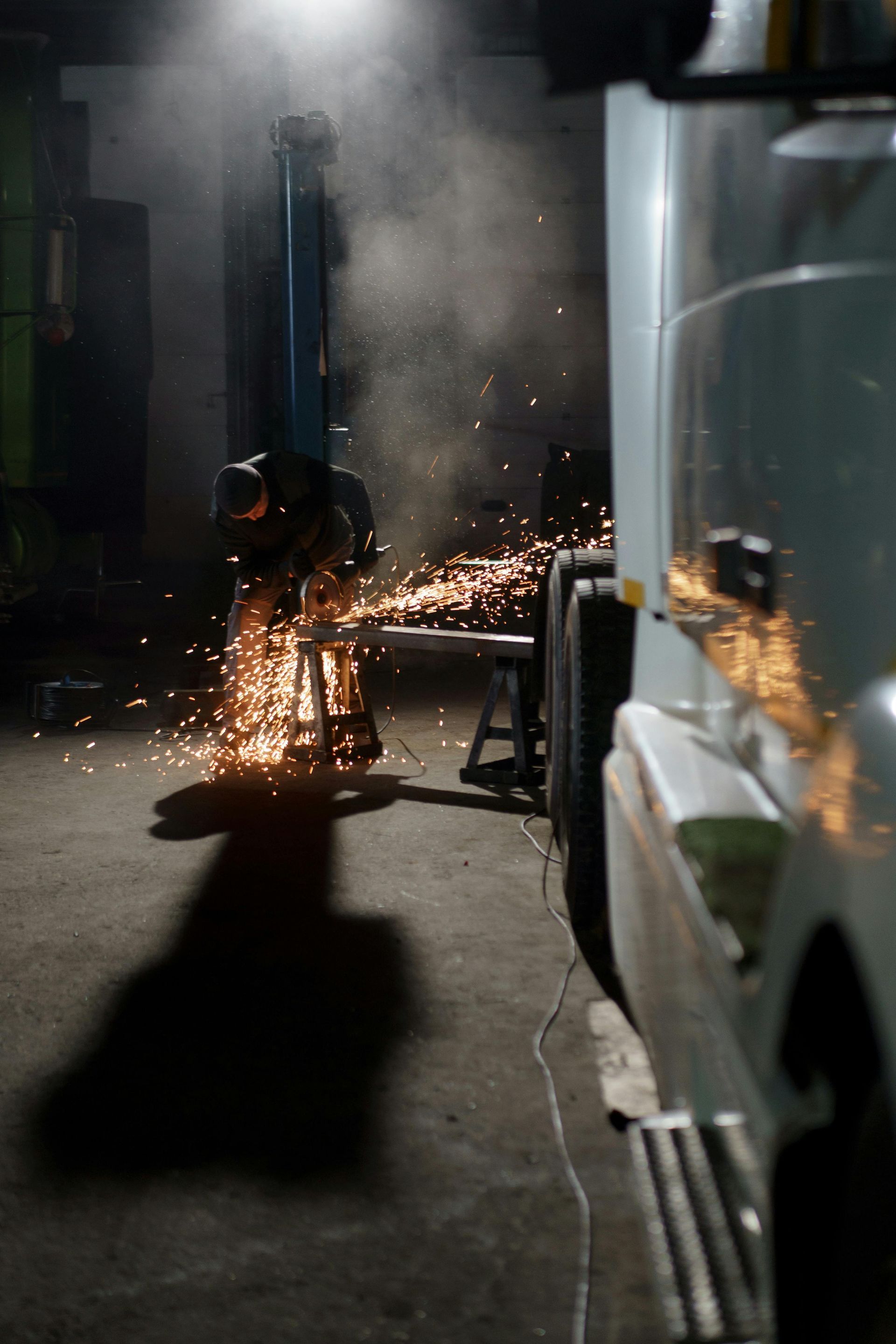
Repairing a bumper pull trailer involves more than replacing broken parts—it requires understanding how forces move through the trailer frame during acceleration, braking, and cornering. When the surge brake actuator fails, the trailer relies entirely on the tow vehicle's brakes, increasing stopping distance and creating dangerous conditions on downhill grades. Replacing the actuator and bleeding the hydraulic lines restores independent braking force. If the A-frame shows cracks near the coupler mount, those welds must be ground out completely and re-welded with proper penetration, then reinforced with gusset plates to distribute stress more evenly.
Once repairs are finished, the coupler locks onto the ball with firm resistance and no lateral play, the trailer follows smoothly through turns without swaying, and brakes engage progressively when you slow down rather than grabbing suddenly or failing to activate. The tongue sits at the correct height relative to your vehicle's hitch, preventing the trailer from riding nose-high or dragging the rear.
Repair decisions depend on how the trailer is loaded and how often it's towed. Trailers hauling landscaping equipment face different suspension wear than those carrying motorcycles or building materials. If you frequently tow in hilly terrain, brake components wear faster and require more frequent inspection. Understanding your usage pattern helps prioritize which components need immediate attention versus routine monitoring.
Common Questions About Bumper Pull Trailer Service
Owners of bumper pull trailers often ask about brake performance, coupler wear limits, and maintenance schedules based on towing frequency and load type.
- How do surge brakes work, and what causes them to fail? Surge brakes use a hydraulic actuator mounted in the tongue that compresses when the trailer pushes against the tow vehicle during deceleration, forcing brake fluid to the wheel cylinders. Failure occurs when the actuator's master cylinder develops internal leaks, air enters the hydraulic lines, or the brake shoes wear down to the rivets.
- When should the coupler be replaced instead of adjusted? Couplers have adjustment bolts that compensate for initial wear, but once the latch mechanism shows visible deformation or the socket no longer grips the ball tightly even after adjustment, replacement is necessary. Continuing to use a worn coupler risks the trailer separating from the hitch during transit.
- What causes a bumper pull trailer to sway while towing? Improper tongue weight—either too light or too heavy—creates instability, as does worn suspension components or incorrect tire pressure. Tongue weight should typically fall between ten and fifteen percent of total trailer weight, and suspension must be in good condition to dampen road inputs.
- Can electric brakes be added to a trailer that only has surge brakes? Electric brakes require a brake controller installed in the tow vehicle and wiring run from the connector to each wheel. While the conversion is possible, it involves significant labor and component cost, so it's usually reserved for trailers that will be towed by vehicles already equipped with brake controllers.
- How often should wheel bearings be serviced on a bumper pull trailer in Services? Bearings should be inspected annually or every 12,000 miles, whichever comes first, with repacking or replacement based on grease condition and bearing surface wear. Trailers used in wet or dusty conditions benefit from more frequent service intervals to prevent contamination damage.
Joe's Mobile Truck and Trailer Repair LLC completes bumper pull repairs at your location, eliminating towing logistics and keeping your equipment operational. Set up a mobile inspection to check brake function and structural integrity before issues escalate.
