Suspension Components That Maintain Load Balance
Trailer Axle Repair in Services for axles bent from impact damage, spring assemblies showing metal fatigue, and hubs running hot after short distances
Bent axles cause uneven tire wear and handling problems that make towing dangerous. When your trailer pulls to one side, tires scrub excessively on the inside or outside edge, or wheel hubs feel hot to the touch after minimal use, the axle system has developed problems that require immediate attention. Joe's Mobile Truck and Trailer Repair LLC provides trailer axle repair throughout Services, bringing the tools and equipment necessary to measure axle alignment, assess bearing condition, and determine whether components can be repaired or require replacement.
Trailer axles support the entire load through leaf springs or torsion arms, and they must maintain precise alignment to distribute weight evenly across all tires. When an axle bends from pothole impact, overloading, or a curb strike, the wheel camber and toe settings shift out of specification. This misalignment forces tires to scrub sideways as they roll, generating heat, accelerating wear, and creating unpredictable handling. Similarly, failed leaf springs cause one side of the trailer to sit lower than the other, shifting load distribution and increasing stress on the remaining suspension components.
Arrange an alignment inspection to measure axle geometry and identify worn suspension components before tire damage worsens.
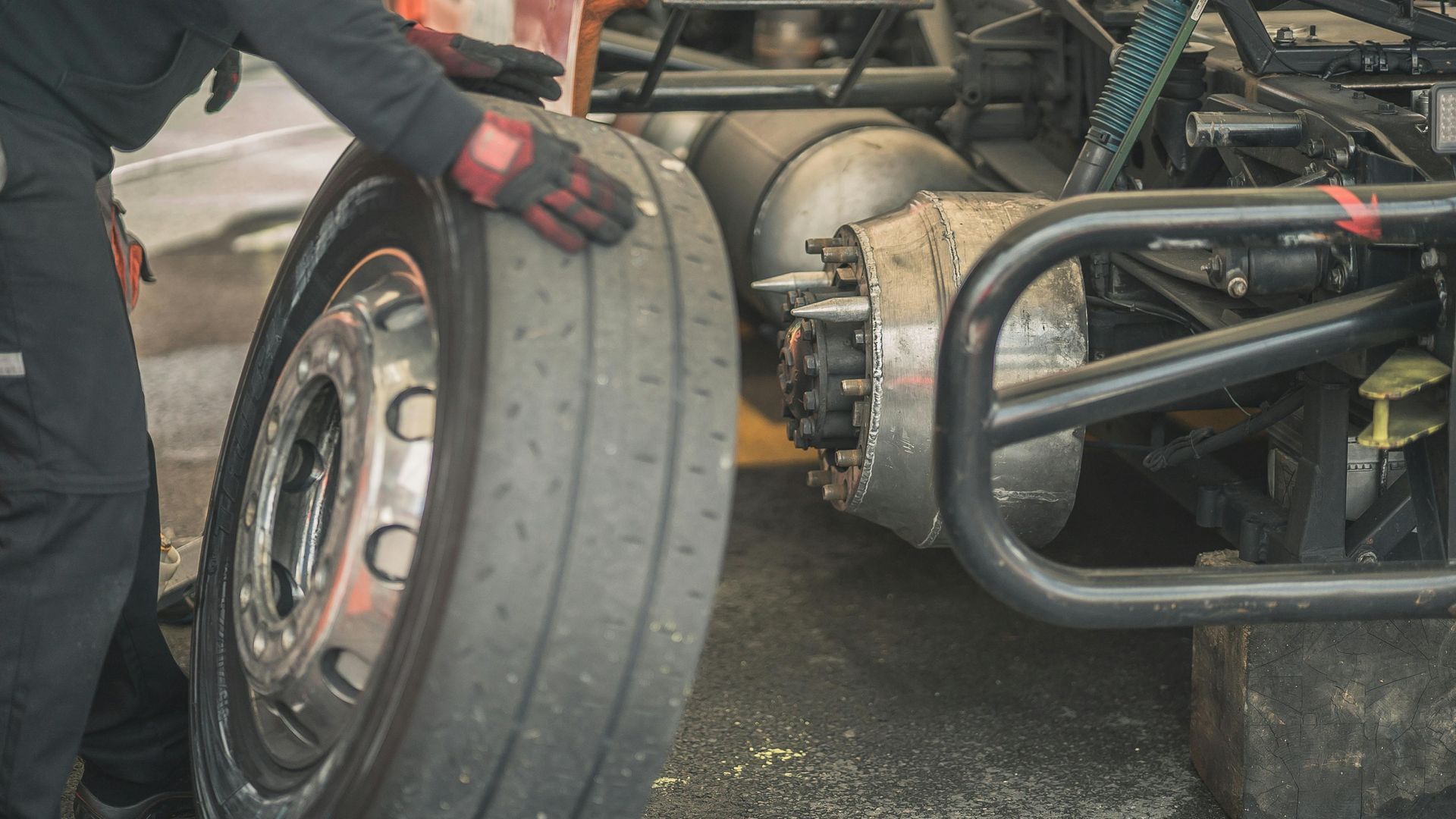
Why Axle Geometry Affects Everything Downstream
Axle repair begins with precise measurement—checking spindle alignment with a laser system or mechanical alignment bar to determine how far out of specification each wheel sits. Minor bends in some axle types can be cold-straightened using hydraulic presses and measured repeatedly to confirm geometry is restored. Severely bent axles, or those made from heat-treated alloys that crack when straightened, require complete replacement. Spring assemblies are inspected for broken leaves, worn shackle bushings, and cracked spring hangers, with repairs ranging from individual leaf replacement to full spring pack installation depending on damage extent.
After axle repair is complete, the trailer tracks straight without constant steering correction from the tow vehicle, tires wear evenly across the tread surface instead of showing feathering or scalloping, and wheel hubs remain cool even after extended highway driving. The trailer sits level when viewed from behind, indicating that spring tension is balanced and axle alignment is symmetrical.
Axle configurations vary based on trailer capacity and design—some use multiple axles with equalized suspension to distribute weight across four or six wheels, while others rely on single heavy-duty axles with high load ratings. Torsion axles eliminate leaf springs entirely, using rubber cords inside the axle tube to provide independent suspension at each wheel. Repair approach changes dramatically based on which system your trailer uses, and understanding the specific failure modes of each design ensures appropriate repair methods are applied.
What Property Owners Usually Ask
Axle problems generate questions about when repair is possible versus when replacement is necessary, how to prevent future damage, and what symptoms indicate immediate safety concerns.
- How can you tell if an axle is bent without specialized equipment? Park the trailer on level ground and measure from the ground to the bottom of the frame at each corner—uneven measurements suggest spring failure or axle damage. Check tire wear patterns: if one tire on an axle shows significantly more wear on one edge while its partner wears evenly, axle alignment is likely off. Tires that scrub audibly during low-speed turns also indicate geometry problems.
- What causes trailer wheel bearings to fail prematurely? Overloading beyond axle capacity, lack of regular greasing, water intrusion through damaged seals, and improper bearing adjustment during installation all lead to early failure. Bearings should be serviced according to manufacturer intervals, typically annually or every 12,000 miles, with immediate service after submersion in water during boat ramp use.
- Can you replace just one spring on a dual-axle trailer? Replacing one spring while leaving an old, sagged spring on the same axle creates uneven load distribution that accelerates wear on the new spring and causes the trailer to lean. Best practice involves replacing both springs on an axle simultaneously to maintain balanced suspension performance.
- Why would an axle need replacement after hitting a pothole? High-impact shock can bend the axle tube, crack spindle welds, or fracture the axle at stress concentration points. Heat-treated axles don't bend gradually—they absorb impact up to a threshold, then fail suddenly through cracking rather than plastic deformation. If cracks are present, straightening isn't possible and replacement is the only safe option.
- What factors affect axle lifespan in Services? Road conditions, load weight relative to axle capacity, towing speed, and maintenance frequency all influence how long axles last. Trailers operated near maximum capacity on rough roads experience more fatigue stress than lightly loaded trailers on smooth pavement. Regular bearing service and spring inspection extend component life by catching wear before it progresses to failure.
Joe's Mobile Truck and Trailer Repair LLC diagnoses and repairs trailer axle issues on-site, measuring alignment and assessing bearing condition without requiring you to transport a damaged trailer. Contact us to schedule a mobile evaluation and receive specific recommendations based on your trailer's current axle condition and usage requirements.
